The Sustainable Impact of Labels and Packaging
Sustainability conversations often focus on big, visible elements—plastic bottles, cardboard boxes, or shipping materials. Yet one of the most overlooked contributors to environmental impact is labels and packaging components. From product labels and adhesives to inks and coatings, these seemingly small details play a significant role in waste generation, recyclability, and a brand’s overall environmental footprint. As sustainability becomes a business imperative rather than a marketing option, understanding the impact of labels and packaging is essential.
Labels and Packaging: Small Components, Big Footprint
Packaging exists to protect products, communicate information, and support branding. Labels are central to this function, carrying regulatory data, instructions, and brand identity. However, traditional labels are often made from mixed materials—plastic films, paper, synthetic adhesives, and chemical-based inks—that complicate recycling and increase landfill waste.
Globally, packaging waste accounts for a substantial share of municipal solid waste, with single-use packaging being a major contributor. Labels, although lightweight, can disrupt recycling streams when they are not designed with end-of-life considerations in mind. For example, non-removable labels or incompatible adhesives can contaminate recyclable materials, reducing their value or causing entire batches to be discarded.
Material Choices and Environmental Impact
The sustainability of labels and packaging begins with material selection. Conventional materials such as virgin plastics and bleached paper require significant energy, water, and chemical inputs during production. In contrast, sustainable alternatives—recycled paper, bio-based films, compostable substrates, and responsibly sourced fibres—help reduce carbon emissions and resource depletion.
Paper labels made from recycled or FSC-certified materials reduce reliance on virgin wood pulp and support responsible forestry. Meanwhile, advances in bio-based plastics derived from sugarcane, corn, or cellulose offer renewable alternatives to petroleum-based films. While these materials are not without challenges, particularly in composting infrastructure, they represent an important step toward circular packaging systems.
Adhesives and Inks: Hidden Sustainability Challenges
Adhesives and inks are often overlooked when assessing packaging sustainability, yet they can significantly affect recyclability. Traditional permanent adhesives can leave residue on containers, making it difficult to separate materials during recycling. Similarly, solvent-based inks and metallic finishes may introduce toxins or interfere with material recovery processes.
Innovations such as water-soluble adhesives, wash-off labels, and low-migration inks are addressing these issues. These solutions allow labels to detach cleanly during recycling, improving material recovery rates. Soy-based, water-based, and UV-curable inks further reduce environmental harm by lowering volatile organic compound (VOC) emissions and improving worker safety during production.
Design for Recycling and the Circular Economy
Sustainable packaging is not just about using “green” materials—it is about designing with the full lifecycle in mind. Design for recycling means considering how labels and packaging will be collected, sorted, processed, and reused after disposal.
Minimalist label designs, mono-material packaging, and clear material identification help recycling facilities operate more efficiently. For instance, using the same polymer for both container and label can eliminate separation issues. Brands that embrace circular economy principles aim to keep materials in use for as long as possible, reducing waste and dependence on virgin resources.
Regulatory Pressure and Consumer Expectations
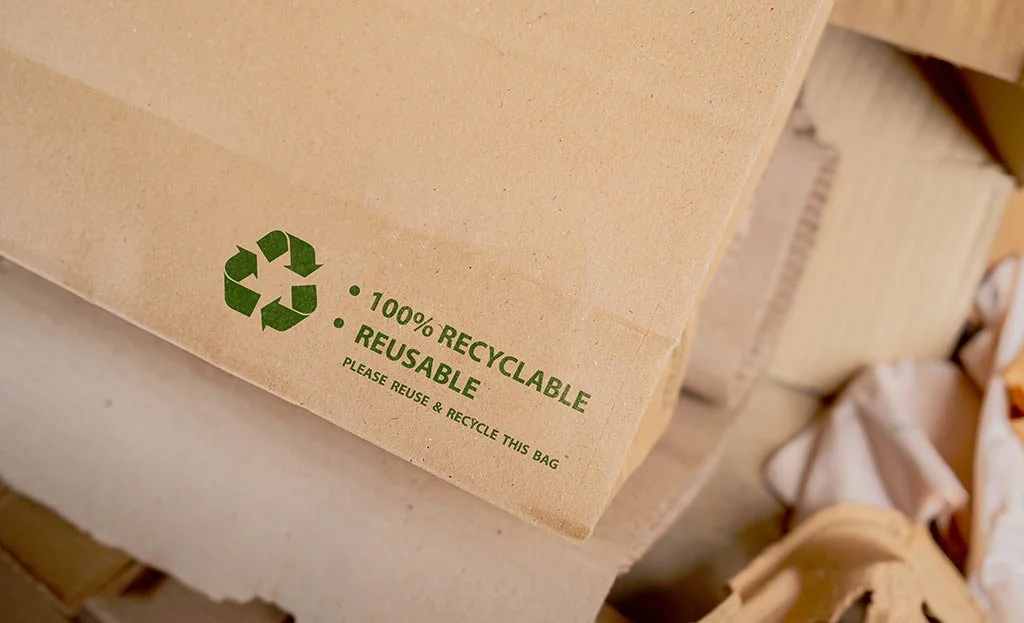
Governments around the world are introducing stricter regulations on packaging waste, extended producer responsibility (EPR), and recyclability standards. Labels must now communicate disposal instructions clearly, such as recycling symbols or composability claims, which increases their role in sustainable behaviour.
At the same time, consumers are more informed and environmentally conscious than ever. Packaging is often the first physical interaction a customer has with a product, and unsustainable packaging can undermine a brand’s credibility. Transparent labelling about materials, recyclability, and environmental impact helps build trust and encourages responsible consumer choices.
Innovation and Technology in Sustainable Labelling
Technological innovation is accelerating progress in sustainable labels and packaging. Digital printing reduces waste by enabling shorter print runs and on-demand production. Smart labels and QR codes can replace excessive printed information, reducing material use while offering consumers access to detailed digital content.
Additionally, lightweighting—reducing the amount of material used without compromising performance—has become a key strategy. Even small reductions in label thickness or packaging weight can result in significant environmental savings when scaled across millions of units.
The Business Case for Sustainable Labels and Packaging
Beyond environmental benefits, sustainable labels and packaging make strong business sense. They can reduce material costs, improve supply chain efficiency, and help brands comply with evolving regulations. More importantly, they align companies with long-term consumer values and environmental goals.
Brands that invest in sustainable packaging signal responsibility, innovation, and future readiness. In competitive markets, this can be a powerful differentiator, turning sustainability from a cost centre into a value driver.
Conclusion
Labels and packaging may seem like minor components of a product, but their sustainable impact is far-reaching. From material selection and recyclability to consumer communication and regulatory compliance, they play a critical role in shaping environmental outcomes. As businesses move toward more sustainable models, rethinking labels and packaging is no longer optional—it is essential. By embracing thoughtful design, innovative materials, and circular principles, brands can significantly reduce their environmental footprint while building trust and resilience for the future.
📞 Get in touch: +44(0)1943 870558
📧 Email us: Sales@genesislabels.co.uk
🌍 Learn more: genesislabelsandpackaging.co.uk